Fast reactions are not always the key to winning an RPG battle. In Honkai: Star Rail, success depends more on team composition, enemy weaknesses, and deciding when to use each character’s abilities.
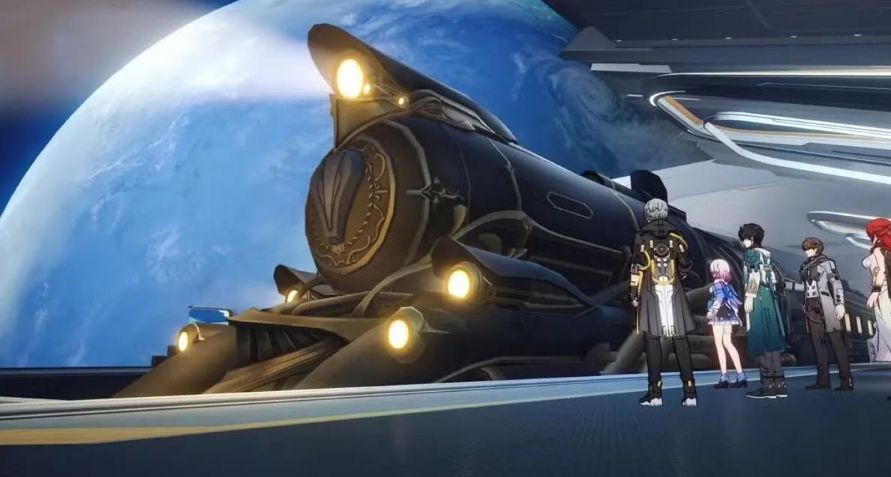
Developed by HoYoverse, Honkai: Star Rail is a free-to-play role-playing game built around turn-based combat, character collection, and a science-fiction story. Players follow the Trailblazer and the crew of the Astral Express as they travel between different worlds, meet new characters, and become involved in conflicts linked to mysterious cosmic forces.
The game offers a different experience from action RPGs that require constant movement, aiming, and real-time dodging. Its combat is more deliberate, but character progression and team management add their own layers of complexity.
So, is Honkai: Star Rail worth playing on mobile in 2026? The answer depends on how much you enjoy tactical battles, story-driven adventures, and long-term character development.
What Is Honkai: Star Rail?
Honkai: Star Rail is a turn-based RPG available on supported mobile and other platforms. Its central story follows the Trailblazer, who travels aboard the Astral Express and visits different worlds as the crew investigates unusual events and confronts powerful enemies.
Rather than presenting one continuous open world, the game uses a series of distinct locations connected through its story and progression. Each destination introduces new environments, characters, quests, and conflicts.
This structure gives the adventure a clear sense of direction. Players can explore individual areas, interact with characters, complete missions, and progress through the main narrative without needing to navigate one enormous seamless map.
The science-fiction setting also allows the game to move between different visual styles and themes. Some locations feel familiar and urban, while others introduce stranger environments and conflicts shaped by the game’s fictional universe.
Storytelling is an important part of the experience. Dialogue, character interactions, and narrative scenes help establish the setting and explain why different events matter.
That approach works well for players who enjoy following a continuing story. However, those who prefer gameplay with minimal dialogue may find that some sections move more slowly than they would like.
Turn-Based Combat: Strategy Over Reflexes
Combat is the defining feature of Honkai: Star Rail.
Instead of controlling every movement and attack in real time, players choose actions for their characters during battles. These decisions include selecting attacks, using character skills, activating powerful abilities, and managing the team’s available resources.
This format makes it easier to think through a turn before committing to an action. Players can consider an enemy’s weaknesses, examine the team’s current condition, and decide which character should act next.
The system is accessible at a basic level, but effective team building takes more thought.
Why Team Composition Matters
Characters have different combat roles and abilities. Some focus on dealing damage, while others provide healing, protection, buffs, or other forms of support.
A team that deals high damage may struggle if it cannot survive a difficult encounter. Similarly, a team with strong defensive support may take too long to defeat enemies if its damage output is insufficient.
The goal is to build a group whose abilities work well together.
Enemy weaknesses also influence combat decisions. The characters that perform well against one opponent may not be the best choice for another, so adapting the team can be more effective than relying on the same strategy in every battle.
Is the Combat Difficult?
The basic turn-based format is relatively easy to understand because players do not need to master complicated real-time touch controls.
However, the deeper systems require learning. Character abilities, equipment, team roles, enemy weaknesses, and progression choices can all influence battle outcomes.
New players may initially focus on using their strongest-looking attacks. As the game introduces more demanding encounters, understanding how characters support one another becomes increasingly useful.
Players who enjoy planning and gradually improving their strategies are likely to appreciate this depth.
Those who prefer improvisational action, precise dodging, and direct control over every movement may find the turn-based format less exciting.
Character Collection and Progression
Character development provides much of the game’s long-term motivation.
As players progress, they can improve characters and equipment, develop abilities, and adjust their teams to handle different challenges. These systems create a reason to revisit characters and refine strategies rather than simply completing the next story mission.
The challenge is deciding where to invest resources.
Upgrading every character at the same pace can spread available materials too thinly. For new players, concentrating on a manageable core team is often more practical than trying to develop every character they obtain.
Team balance also matters. A character who deals damage may become more effective when paired with someone who provides useful support or improves the team’s ability to survive.
This means progression is not only about making individual characters stronger. It is also about understanding how their roles fit together.
Understanding the Character-Acquisition System
Honkai: Star Rail is free to download but includes optional purchases and a character-acquisition system.
Players can obtain resources through gameplay, while optional spending may provide additional opportunities to pursue characters or items. The exact options and rates depend on the current in-game system, so players should check the available details before making purchases.
Collecting characters can be appealing, especially when a new character offers an interesting design or a different combat role. However, obtaining every character is not necessary for enjoying the game’s main features.
Before spending money, consider whether a character fits your preferred team and whether the purchase is within your budget.
Limited-time opportunities can create pressure to make quick decisions. Setting a spending limit in advance can help prevent short-term excitement from turning into unwanted expenses.
For players who enjoy collecting characters, this system may be part of the appeal. For those who prefer a predictable, one-time purchase, it may be a significant disadvantage.
Is Honkai: Star Rail Good on Mobile?
Turn-based combat is well suited to touchscreen devices because battles do not depend on constant precision aiming or rapid movement.
Players can choose actions at their own pace, making the basic combat experience easier to manage during a break or a short period of free time.
The game’s interface also needs to present character information, abilities, and combat options clearly. Players who are comfortable with menu-based RPGs may find this approach familiar.
However, the fact that battles are turn-based does not mean every part of the game is brief. Story sequences, exploration, character management, and progression activities can require longer sessions.
Performance and Storage
The actual mobile experience depends on the device. Hardware capability, available memory, operating system, graphics settings, and background applications can all affect performance.
Storage is another consideration. Game resources and updates can increase the amount of space required, so players should check the current requirements for their device before downloading.
If your phone has limited free storage or struggles with demanding games, check compatibility first rather than assuming the experience will be smooth.
It is also worth leaving additional space for future updates instead of using nearly all the storage available on the device.
Internet Connection
Honkai: Star Rail is an online game. Players should expect to need an internet connection to access its main services.
This makes it less suitable for situations where a reliable connection is unavailable. If offline access is a priority, a single-player RPG designed for offline play may be a better choice.
Honkai: Star Rail Pros and Cons
Pros
- Strategic turn-based combat: Battles reward planning and sensible ability choices rather than fast reflexes alone.
- Distinct character roles: Team building creates opportunities to experiment with different combinations.
- Science-fiction setting: Different locations and characters give the story room to explore varied themes.
- Touchscreen-friendly battles: Players can make decisions without constantly aiming or dodging in real time.
- Long-term progression: Character development and team improvement provide ongoing goals.
- Multiple ways to engage: Players can follow the story, develop characters, and take on different combat challenges.
Cons
- Dialogue-heavy sections: Players who prefer uninterrupted gameplay may find some story sequences lengthy.
- Progression complexity: Equipment, abilities, and team development take time to understand.
- Resource management: Developing too many characters at once can slow progress.
- Repeated encounters: Combat may feel predictable when similar strategies work across multiple battles.
- Potential spending pressure: Character collection may encourage purchases for players who want specific characters.
- Online requirement: The game is not a good fit for players who need fully offline access.
Honkai: Star Rail vs. Action RPGs
One useful way to decide whether Honkai: Star Rail is right for you is to compare its style with a real-time action RPG.
In an action RPG, success often depends on movement, timing, positioning, and reacting quickly to enemy attacks. Players who enjoy controlling every moment of a battle may prefer that format.
Honkai: Star Rail shifts the emphasis toward planning. Players consider character roles, enemy weaknesses, available abilities, and the order of their actions.
Neither approach is automatically better. They appeal to different preferences.
If you enjoy thinking through a battle before choosing your next move, the turn-based format may feel satisfying. If you prefer the physical rhythm of dodging, aiming, and attacking in real time, an action-focused game may be more enjoyable.
The story structure is another consideration. Honkai: Star Rail places meaningful emphasis on narrative and dialogue, so players who enjoy following characters and their relationships may find more to appreciate than those who mainly want quick combat.
Who Should Play Honkai: Star Rail?
Honkai: Star Rail is worth considering if you enjoy turn-based RPGs, science-fiction settings, character collection, and team-building decisions.
It may be a particularly good fit for players who want combat that allows time to think rather than requiring constant reactions.
It is also suitable for people who enjoy developing a team over time and gradually learning how different characters work together.
However, it may be less appealing if you:
- Prefer fast, real-time action combat.
- Want a game with very little dialogue.
- Dislike managing equipment and character progression.
- Prefer to unlock everything through a simple, predictable purchase.
- Need a game that works entirely offline.
Mobile players should also check their device’s compatibility and available storage before installing.
Is Honkai: Star Rail Worth Playing in 2026?
For fans of tactical RPGs, Honkai: Star Rail offers a combination of turn-based battles, character development, and a continuing science-fiction story.
Its biggest advantage is the way combat encourages players to think about team composition and the interaction between character abilities. The mobile control scheme also makes battles approachable for players who do not enjoy precise real-time controls.
The main drawbacks are its progression complexity, story-heavy sections, online requirement, and optional spending systems.
Whether those drawbacks matter depends on what you want from a mobile RPG. Players who enjoy planning teams and following an ongoing narrative may find the experience rewarding. Those who prefer fast matches, minimal dialogue, or