Clash Royale Review 2026: Is This Strategy Game Still Worth Playing?
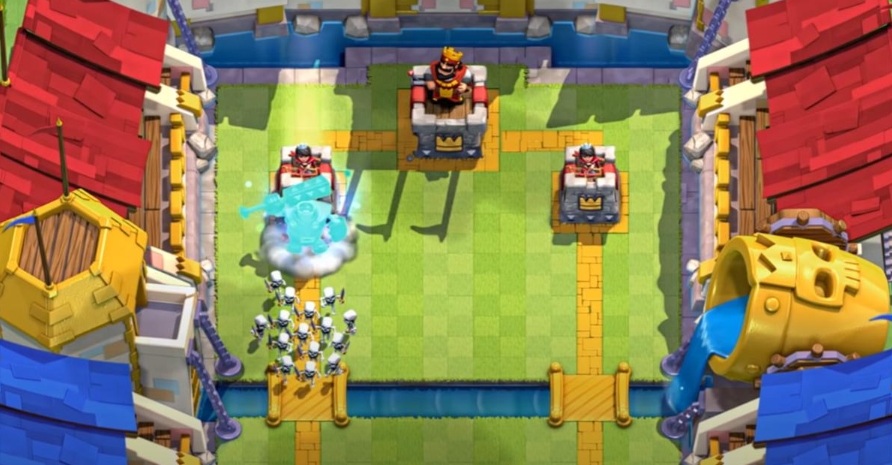
Clash Royale is a real-time strategy game that combines card-based deck building with fast, competitive tower battles. Instead of controlling an entire army at once, players use cards to deploy troops, cast spells, and defend their towers while managing a limited supply of Elixir.
The basic idea is easy to understand: build a deck, make smart decisions during battle, and destroy the opponent’s towers. However, winning consistently takes more than collecting powerful cards. Players must understand how different cards work together, recognize their opponent’s strategy, and decide when to attack or defend.
In this Clash Royale review, we look at its gameplay, deck-building system, competitive progression, free-to-play model, advantages, and drawbacks to help you decide whether it is worth playing in 2026.
1. What Is Clash Royale?
Clash Royale is a competitive mobile strategy game developed by Supercell. It brings together elements of collectible card games, real-time tactics, and tower defense.
Players build a deck of cards featuring different troops, spells, and other battle options. During a match, they use Elixir to deploy cards and attempt to gain an advantage over their opponent.
The challenge comes from balancing offense and defense. Sending several powerful units toward an enemy tower might create pressure, but it can also leave your own side vulnerable. Spending too much Elixir at the wrong moment may give your opponent an opportunity to launch a counterattack.
This creates a gameplay loop built around three important questions:
- When should you attack? A strong push can pressure an opponent, but the timing matters.
- How should you defend? Choosing the right counter can stop an attack without wasting resources.
- How much should you spend? Managing Elixir carefully helps you avoid running out of options when you need them most.
These decisions give Clash Royale more strategic depth than its simple controls might suggest.
2. Gameplay: Simple Controls, Strategic Decisions
One of Clash Royale’s strengths is how quickly players can understand the basic rules.
You select cards from your deck, deploy them on the battlefield, and react to the opponent’s moves in real time. You do not need to control every unit individually. Instead, your main responsibility is deciding which card to play, where to place it, and when to use it.
However, simple controls do not mean every match is easy.
For example, an opponent might send a group of troops toward one of your towers. You could respond with a defensive card, but the best choice depends on the units involved, their position, and the resources you have available.
A successful defense can also create an opportunity to counterattack. If you spend fewer resources defending than your opponent spent attacking, you may have an advantage when launching your next push.
This interaction between resource management and battlefield decisions is central to the game’s appeal.
The main strength of Clash Royale’s gameplay is that individual decisions can have an immediate impact on the match. The challenge is learning which decisions are effective against different opponents and situations.
3. Deck Building: Finding the Right Card Combinations
Deck building is one of the most important parts of Clash Royale.
A strong deck is not simply a collection of individually powerful cards. Its cards need to complement one another and provide answers to different threats.
When building a deck, players should consider several factors:
- Offensive options: How will the deck put pressure on enemy towers?
- Defensive coverage: Can it respond to different types of enemy attacks?
- Elixir cost: Is the deck too expensive to use consistently?
- Card synergy: Do the cards work well together, or do they compete for the same role?
- Flexibility: Can the deck handle more than one type of opponent?
For example, a deck filled with expensive units may deliver a powerful attack but struggle when facing an opponent who applies constant pressure. A deck built around cheaper cards may cycle through its options quickly, but it still needs an effective way to deal damage and finish attacks.
There is no single deck that automatically wins every matchup. Card balance, player skill, progression, and the strategies encountered in battle can all influence performance.
For beginners, it is usually more practical to learn a manageable group of cards before frequently changing the entire deck. Understanding how your cards interact can make it easier to identify mistakes and improve over time.
4. Progression and Competitive Play
Clash Royale gives players reasons to keep playing beyond individual matches. Its competitive and progression systems provide goals to work toward as players develop their collections and learn more advanced strategies.
Competitive play can be rewarding because improvement is not limited to unlocking new cards. Players can also become better at predicting enemy moves, managing Elixir, choosing defensive responses, and recognizing when to stop an attack.
However, progression can also be frustrating.
A losing streak may make it feel as though your deck is no longer effective. In reality, losses can have several causes, including poor timing, inefficient resource use, unfavorable matchups, or differences in card progression.
Instead of changing your deck after every defeat, try reviewing what happened during the match.
Ask yourself:
- Did I spend too much Elixir on an attack that achieved little?
- Did I use an important defensive card too early?
- Did I leave a tower vulnerable while attacking?
- Could I have responded differently to the opponent’s main strategy?
These questions can turn a frustrating loss into a useful learning experience.
The exact progression systems, rewards, and available competitive modes may change with game updates and seasons, so check the current in-game information before making decisions based on specific rewards or requirements.
5. Is Clash Royale Pay-to-Win?
Clash Royale is free to download and offers optional in-game purchases. However, free access does not necessarily mean that every player will have the same progression experience.
Card collection and card levels can influence how players approach competitive matches. Players who have spent more time progressing, or who purchase progression resources, may have access to more developed collections.
This can make the experience feel less even for newcomers, particularly when they face opponents whose cards are more developed.
At the same time, card levels are not the only factor that determines a match. Deck composition, timing, resource management, and knowledge of card interactions remain important parts of effective play.
It is therefore useful to separate two questions:
Does progression affect the experience? Yes. Collection development and card levels can matter.
Can spending replace strategic skill? No. Purchases do not automatically make someone better at choosing cards, defending attacks, or managing Elixir.
Whether the free-to-play model feels fair will depend partly on your expectations and the competitive environment you encounter.
If you decide to play without spending money, focus on learning your available cards, developing a consistent deck, and understanding the progression options currently offered in the game. Avoid making purchases simply because you have lost several matches in a row.
6. Clash Royale Pros and Cons
Before deciding whether to play, it is worth looking at the game’s main strengths and limitations.
Pros
- Strategic gameplay: Matches reward thoughtful card selection, timing, and resource management.
- Short-session format: The battle structure works well for players who prefer playing in brief sessions.
- Deck-building variety: Different card combinations can lead to different strategies and play styles.
- Immediate feedback: Players can often identify a decision that changed the direction of a match.
- Room to improve: Learning card interactions and opponent strategies provides a long-term challenge.
Cons
- A competitive learning curve: New players need time to understand cards, counters, and effective deck construction.
- Progression can take patience: Developing a collection may take time, especially for players who do not spend money.
- Losses can be frustrating: Competitive matches do not always go as planned, and repeated defeats may discourage some players.
- Card levels can affect matchups: Differences in progression may influence the experience.
- Not designed for everyone: Players who prefer relaxed, single-player adventures may find the competitive format stressful.
Overall, the strengths of Clash Royale are most apparent for players who enjoy improving through competition. Its drawbacks are more noticeable for people who prefer predictable progress or a more relaxed gaming experience.
7. Tips for Beginners
If you are new to Clash Royale, a few practical habits can make the learning process easier.
Learn What Your Cards Do
Before focusing on competitive results, understand the role of each card in your deck. Identify which cards are primarily offensive, which are useful for defense, and which can respond to common threats.
Knowing your available options makes it easier to react when a match becomes unpredictable.
Manage Elixir Carefully
Avoid spending all your resources on a single attack without considering what your opponent might do next.
A large push can be effective, but it may leave you unable to defend your towers. Try to consider both the immediate attack and the possible response.
Avoid Changing Your Deck Too Often
Experimentation is useful, but replacing several cards after every loss makes it harder to understand what is working.
Learn a deck well enough to recognize its strengths and weaknesses before making major changes.
Review Your Mistakes
After a difficult match, think about the decisions that had the greatest impact.
Did you defend inefficiently? Did you attack at the wrong time? Did the opponent repeatedly exploit a weakness in your deck?
Identifying one mistake to improve is often more useful than simply playing another match without reflection.
Set a Reasonable Spending Limit
You can begin playing without making purchases. If you later decide to spend money, review the available offers carefully and set a budget that fits your circumstances.
Competitive progress should not become a reason to spend more than you intended.
8. Who Should Play Clash Royale?
Clash Royale is a good option for players who enjoy real-time strategy, competitive challenges, and experimenting with different card combinations.
It may particularly appeal to players who like games where improvement comes from learning patterns, making better decisions, and adapting to opponents.
The game may be less appealing if you prefer a traditional single-player campaign, a story-driven adventure, or a completely relaxed experience without competitive pressure.
Your enjoyment will also depend on how you feel about collection-based progression. Players who enjoy gradually developing their options may appreciate the long-term goals, while those who want immediate access to every strategic option may find progression less satisfying.
If you are unsure, starting with the free version is a practical way to see whether the gameplay suits you before considering any purchases.
Frequently Asked Questions
Is Clash Royale free to play?
Yes. Clash Royale is free to download and includes optional in-game purchases. Players should check the current in-game store and progression systems for the latest details.
Is Clash Royale a card game or a strategy game?
It combines both. Cards determine which troops, spells, and other options you can use, while real-time decisions determine how you respond to your opponent.
Is Clash Royale beginner-friendly?
The basic mechanics are relatively easy to understand, but competitive play takes practice. New players need time to learn card interactions, build effective decks, and manage Elixir.
Can you enjoy Clash Royale without spending money?
Yes, you can start playing without purchasing anything. However, collection development and card levels may affect your progression and competitive experience.
Is Clash Royale worth playing in 2026?
It is worth considering if you enjoy competitive mobile strategy, deck building, and short real-time battles. If you prefer a relaxed single-player game or dislike progression systems, another genre may suit you better.
Final Verdict: Is Clash Royale Worth Playing?
Clash Royale combines accessible controls with a competitive system built around card selection, Elixir management, and real-time decision-making.
Its greatest strength is the relationship between offense and defense. A carefully timed counter can stop an attack and create an opportunity to push back, while an impulsive decision can leave your towers exposed. Learning these interactions gives players a reason to keep improving.
The main drawbacks are its competitive pressure, the time required to develop a collection, and the potential influence of card levels on matchups. These factors may make progression less enjoyable for players who prefer a more relaxed experience.
Our verdict: Clash Royale is worth considering in 2026 if you enjoy strategic mobile games that reward practice and adaptation. It is less suitable for players who want a story-driven adventure or a completely stress-free way to play.
If you are interested, start with the free version, learn the fundamentals, and decide whether its competitive style matches what you want from a mobile game.