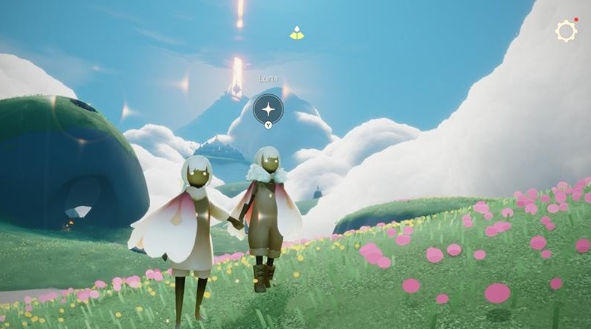
Not every mobile game needs intense combat, competitive rankings, or constant rewards to keep players interested. Sky: Children of the Light offers a different kind of experience, built around exploration, flight, music, and social interaction.
Developed by thatgamecompany, Sky: Children of the Light invites players into a beautiful fantasy world where they can travel between different realms, discover hidden areas, collect light, and encounter other players along the way.
Rather than focusing on defeating enemies or becoming the strongest player, the game encourages curiosity and cooperation. You might spend one session exploring a new environment, another helping a fellow traveler, or simply flying through the landscape and enjoying the atmosphere.
However, its relaxed design will not appeal to everyone. Players who prefer challenging combat, clear competitive goals, or fast-paced action may find the experience too slow.
In this Sky: Children of the Light review, we explore its gameplay, world design, social features, progression, mobile experience, and potential drawbacks to help you decide whether this peaceful adventure is worth trying.
1. Exploring the World of Sky: Children of the Light
Exploration is at the heart of Sky: Children of the Light.
The game takes place in a fantasy kingdom divided into different realms. Each area has its own visual atmosphere, environmental details, and places to discover. Instead of moving through a world designed entirely around combat, players are encouraged to look around, find paths, and uncover things they might initially overlook.
This makes the environment an important part of the experience.
A journey through a realm may involve following a trail, reaching an elevated platform, discovering a hidden passage, or finding something that helps you progress. The sense of discovery comes from paying attention to the world rather than simply defeating a sequence of enemies.
For players who enjoy atmospheric adventure games, this approach can be refreshing. Exploration feels like the main activity instead of a break between battles.
The design also gives players room to move at their own pace. You can focus on discovering new places or revisit familiar areas as you work toward your personal goals.
However, players who prefer constant action may find that some exploration sections lack the intensity they expect from a traditional adventure game.
The main strength of Sky’s world design is how it encourages players to explore out of curiosity rather than compete for rewards.
2. Flight and Movement: More Than Getting from One Place to Another
Flight is one of the defining features of Sky: Children of the Light.
Rather than treating movement as a simple way to travel between objectives, the game makes flying an important part of exploration. Players can glide through open spaces, gain height, move between platforms, and search for routes that are not immediately obvious.
This creates a different relationship with the environment.
In many adventure games, players spend most of their time following paths on the ground. Sky adds a vertical dimension, encouraging you to look above and around your current position rather than focusing only on what is directly ahead.
Learning to move confidently through the environment can make exploration more enjoyable. Reaching a previously inaccessible area or discovering a new route can feel rewarding even without a traditional combat encounter.
Movement is also closely connected to the game’s sense of freedom. Wide spaces and open views allow players to enjoy the journey instead of treating every section as an obstacle to overcome.
That said, players who prefer complex combat controls or demanding mechanical challenges may find the movement system less challenging than they would like.
The appeal is not about mastering difficult combinations of attacks. It is about becoming comfortable with movement and using it to discover more of the world.
3. Social Gameplay: Cooperating Instead of Competing
Sky: Children of the Light places social interaction at the center of its identity.
Other players can appear during your journey, creating opportunities for shared exploration and cooperation. Rather than treating every encounter as a battle, the game encourages players to interact and experience the world together.
This gives the multiplayer experience a different tone from competitive mobile games.
In a traditional competitive game, meeting another player often means preparing to fight, comparing rankings, or trying to win. In Sky, an encounter can instead become an opportunity to travel together, help someone through an area, or share a quiet moment in the game world.
For players who enjoy cooperative experiences, this can make the journey feel more personal.
The social design may also appeal to people who want multiplayer interaction without the pressure of constant competition. You do not need to treat every session as a test of skill against other players.
However, social interaction is not equally appealing to everyone.
Players who prefer a completely solo experience may find the multiplayer elements less interesting. The quality of social encounters can also depend on other players’ availability and willingness to interact.
It is best to approach Sky as a shared adventure in which cooperation is encouraged, rather than as a conventional multiplayer game built around winning and losing.