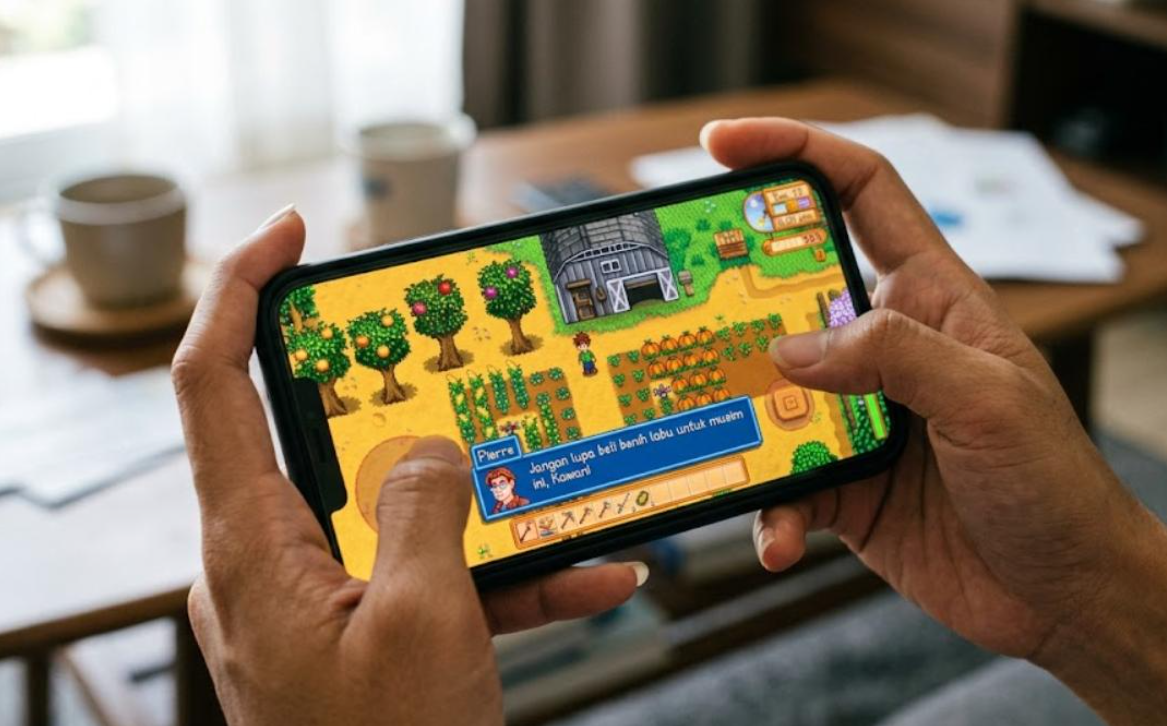
Not every mobile game needs fast combat, competitive rankings, or a constant stream of daily challenges. Sometimes, a game is more enjoyable when there is no pressure to win and no need to rush toward the next objective.
Stardew Valley takes that approach. This farming RPG lets players leave their old lives behind, restore an abandoned farm, build relationships with the people in a small town, and gradually create a routine of their own.
The mobile version brings the experience to phones and tablets, with touchscreen controls and features designed for shorter play sessions. Instead of following a strict mission list, players decide how to spend each in-game day.
But is Stardew Valley worth buying on mobile in 2026? That depends on what you want from a game. Its farming, exploration, and character interactions offer plenty of variety, although its slow pace and open-ended structure will not suit everyone.
1. What Is Stardew Valley?
Stardew Valley is a farming and life simulation RPG developed by ConcernedApe. You begin with an overgrown farm and gradually transform it into a productive home.
At first, progress is relatively simple. You clear weeds, remove rocks, plant seeds, water crops, and collect resources. As you earn money and unlock more options, you can expand your fields, raise animals, craft equipment, and improve your property.
The game also follows a seasonal calendar. Different crops grow during different seasons, so planning matters. A crop that performs well in spring may not be suitable for summer, and seasonal changes can affect how you manage your time and resources.
What makes the experience appealing is that there is no single definition of success. You might focus on building a profitable farm, collecting rare items, exploring underground areas, or developing relationships with the townspeople.
This freedom is one of the game’s biggest strengths. You can make steady progress without feeling that every activity must be completed immediately.
2. Farming, Crafting, and Daily Progression
Farming is the foundation of Stardew Valley, but it gradually becomes part of a much larger management system.
You need to decide which crops to plant, how much money to spend on seeds, and when to reinvest your earnings. As your farm grows, additional options such as animals, machines, and building upgrades give you more ways to produce and process goods.
These systems create a satisfying progression loop. Early on, even a small harvest can feel meaningful. Later, you can work toward more ambitious projects and organize your farm around your preferred playstyle.
However, the game does expect some patience.
Energy, time, seasonal schedules, and limited resources all affect what you can accomplish in a day. You cannot always complete every activity you have planned, especially during the early stages when your equipment and farm are limited.
For some players, these restrictions make progress more rewarding. For others, repeating everyday tasks may eventually feel like work rather than entertainment.
The key question is whether you enjoy gradual improvement. If you like turning a modest starting point into something more developed, the farming system offers plenty of reasons to keep playing.
3. Life in Town: Relationships, Quests, and Festivals
Stardew Valley is more than a farming simulator. The nearby town adds a social side to the experience.
Its residents have individual personalities, routines, and storylines. By talking to characters, giving appropriate gifts, completing requests, and participating in seasonal festivals, you can gradually build relationships with them.
These interactions give the town a sense of progression. Rather than spending every session working on crops, you can make social activities part of your daily plans.
Relationships also provide additional goals for players who enjoy character-driven games. Some players may be interested in discovering everyone’s story, while others might prefer focusing on their farm and interacting with the town only when convenient.
The game does not force you to approach these systems in just one way.
That flexibility is useful, although players who expect a tightly directed main story may find the narrative less focused than in a traditional role-playing game.
4. Exploration and Combat Add Variety
When you want a break from farming, Stardew Valley offers other activities to explore.
Fishing provides a different way to earn money and collect items. Gathering resources encourages you to explore the surrounding areas, while the mines introduce combat, equipment upgrades, and the search for valuable materials.
These activities are important because they give players alternatives when daily farm work becomes repetitive.
The mines, in particular, add a more challenging side to an otherwise relaxed game. You need to manage your health, choose suitable equipment, and decide how far to explore before returning to safety.
Still, combat is not the main attraction for everyone. Players who primarily enjoy action-heavy RPGs may find it relatively simple, while those who prefer farming, collecting, and exploration may appreciate it as a change of pace.
The balance between peaceful activities and occasional challenges helps Stardew Valley appeal to more than one type of player.
5. How Good Is Stardew Valley on Mobile?
The mobile version is designed to make the farming experience work on a touchscreen rather than simply relying on traditional keyboard controls.
According to the official iOS store listing, the mobile release includes multiple control options, auto-save, and features adapted for touchscreen gameplay. The available control methods can make common activities such as moving around the farm and selecting tools more convenient.
Auto-save is particularly useful for players who prefer shorter sessions. You can make progress without having to organize every play session around remembering to save manually.
However, touchscreen controls have limitations.
Stardew Valley contains many interactive objects, tools, menus, and small targets. Selecting the wrong item or interacting with an unintended object can interrupt the flow of play. Players who prefer precise movement may need time to find a control scheme that feels comfortable.
The best setup can also depend on your device and personal preferences. It is worth exploring the in-game options rather than assuming the default controls will suit everyone.
Is the mobile version suitable for short sessions?
Yes, it can be a good fit for players who want to make progress in manageable chunks.
You might spend one session planting crops, another gathering resources, and a later session exploring the mines. The game does not require every session to focus on the same activity.
However, in-game days still have time and energy limits. If you start a task late in the day, you may need to leave part of it unfinished until the next session.
Overall, mobile Stardew Valley is best suited to players who enjoy returning to a long-running game and making gradual progress.
6. Price and Value: Is It Worth Buying?
Stardew Valley has traditionally been sold as a paid mobile game rather than relying on the typical free-to-play model.
For players who prefer purchasing a game instead of dealing with frequent monetization prompts, this can be an advantage. The experience is built around developing your farm and exploring the game, rather than requiring you to compete for rankings or keep up with other players.
Its long-term value comes from the variety of activities and the freedom to pursue different goals. Farming, crafting, relationships, fishing, and exploration can keep the experience interesting well beyond the opening hours.
That said, a large amount of content does not automatically make a game enjoyable for everyone.
If you dislike repetitive routines, prefer fast-paced action, or want a clearly directed storyline, you may not get as much enjoyment from it as someone who likes relaxed simulations.
Before purchasing, check the current listing for your device. Pricing, availability, supported operating systems, and some features can vary by platform and region.
7. Stardew Valley Mobile: Pros and Cons
Pros
- Flexible gameplay: Focus on farming, relationships, exploration, or a combination of activities.
- Meaningful progression: Expand your farm and unlock new possibilities over time.
- More than farming: Fishing, crafting, quests, festivals, and mines provide variety.
- Mobile-friendly features: Touchscreen control options and auto-save support mobile play.
- Relaxed pace: You can set your own goals instead of competing against other players.
- Long-term appeal: Multiple activities and personal goals give you reasons to return.
Cons
- Repetitive routines: Daily farming and resource collection may become tedious.
- Limited direction: Players who need a clear sequence of missions may feel lost.
- Touchscreen learning curve: Some interactions can take practice to perform comfortably.
- Less emphasis on action: Combat is only one part of the experience and may not satisfy action-focused players.
- Requires patience: Farm development and other forms of progression take time.
8. Who Should Play Stardew Valley Mobile?
Stardew Valley is worth considering if you enjoy farming simulations, life games, crafting, collecting, or RPGs that reward gradual progress.
It is particularly suitable for players who like setting their own objectives. You could spend several sessions improving your farm, focus on building relationships with villagers, or explore the world at your own pace.
It can also suit players who want a game that does not revolve around competitive rankings or constant pressure to complete daily challenges.
On the other hand, it may not be the best choice if you prefer short, action-packed matches, a tightly structured campaign, or frequent high-intensity challenges.
Before buying, ask yourself one simple question: Do you enjoy deciding what to do next, or would you rather have the game tell you exactly where to go?
If you enjoy the freedom to make your own plans, Stardew Valley’s open-ended design is likely to be a major advantage.
Frequently Asked Questions
Is Stardew Valley free on mobile?
Stardew Valley has traditionally been a paid mobile game. The current price and availability may vary by platform and region, so check the official store listing before purchasing.
Can you play Stardew Valley offline on mobile?
The game is designed around a single-player farming experience, but offline availability and certain platform-related functions can depend on the version and circumstances. Check the current store information and test your installed version if offline access is important to you.
Does Stardew Valley mobile support controllers?
The mobile version offers touchscreen control options, but controller compatibility can depend on the platform, operating system, and game version. Check the current store listing or the game’s settings before buying specifically for controller use.
Is Stardew Valley good for beginners?
Yes, it can be approachable for beginners who enjoy experimenting and learning at their own pace. However, the game does not explain every possible strategy immediately, so some systems may take time to understand.
Is Stardew Valley worth buying in 2026?
It is worth considering if you enjoy farming, crafting, exploration, and character relationships. Its flexible gameplay and long-term progression offer plenty to do, but players who dislike repetitive routines may prefer a different genre.
Final Verdict: A Relaxing Farming RPG That Rewards Patience
Stardew Valley Mobile stands out because it gives players room to create their own experience.
One day might be spent growing crops and improving the farm. Another might involve fishing, exploring the mines, completing quests, or getting to know the town’s residents. There is no need to approach every session in the same way.
The mobile version adds useful touchscreen features and auto-save, although the controls may take some adjustment. Its slow progression and repeated daily tasks will also be more appealing to some players than others.
Our verdict: Stardew Valley Mobile is a strong option for players who enjoy relaxed farming RPGs, creative freedom, and gradual progression. If you want constant action or a tightly guided story, it may not be the right fit. But if building a virtual life at your own pace sounds appealing, this farming RPG is well worth considering.